


inDrive. Rides with fair fares
® SUOL INNOVATIONS LTD
I first noticed inDrive because it treats a ride as a conversation rather than a fixed checkout total. Instead of simply accepting the first fare shown by a traditional taxi app, I can enter what I consider a reasonable amount, see available driver responses, and choose the option that fits my situation. That idea sounds simple, but it changes how I plan short trips, airport journeys, and rides at awkward times.
As a free Maps & Navigation app from ® SUOL INNOVATIONS LTD, inDrive is built for people who want more say in the price and the driver they select. It is suitable for Everyone, and its popularity is easy to understand: the app has passed 100 million installs, carries a 4.8 average from roughly 14 million ratings, and has around 10 thousand written reviews. Those figures do not replace personal testing, though. The real question is whether negotiating a ride feels useful or merely adds another step when I am already in a hurry.
How inDrive feels when the network is doing the heavy lifting
inDrive depends heavily on a live connection because the central experience is built around sending a ride request, receiving responses, and keeping track of the trip as it develops. When the connection is stable, the process feels direct. I can enter the pickup and destination, propose a fare, and wait for drivers to respond rather than being locked into one automatic quote.
Related News

Bolt: Request a Ride's Strategic Edge in the Ride-Hailing Arena

Yango: Streamlining Urban Life with Integrated Mobility and Delivery

inDrive: Redefining Ride Fares in a Competitive Market
That network dependence becomes obvious in places where mobile service changes quickly. A request made beside a busy station may work smoothly, while the same request inside a concrete building, underground car park, or crowded terminal can take longer to update. I would not treat the app as a tool that can be relied on without connectivity. It is better understood as a live marketplace: its usefulness comes from current driver availability and communication, so a weak signal affects the experience at its foundation.
There is also a practical difference between having enough connection to open the app and having a reliable connection throughout the ride process. A screen may load while a request, driver response, or location update takes longer than expected. I have learned to avoid making the request at the exact moment I am walking away from a known signal area. Giving the app a little time before moving makes the whole exchange less stressful.
Related News

Why WhatsApp Messenger Still Makes Everyday Communication Feel Easy

Jurassic World: The Game Is the Better Dino Tycoon for Strategic Players

Threads in Real Life: Who Should Join, Lurk, or Leave

How SHEIN Turned Shopping Into an Endless Content Feed

How to Make Fortnite Feel Smarter on Mobile

Should You Switch to Microsoft Outlook on Mobile?
The most important habit is to confirm the ride before treating it as real. A proposed fare is not the same thing as an accepted trip, and a driver response is not the same thing as being at the pickup point. I check the selected driver, vehicle details, pickup location, and the latest status while I still have a dependable connection. That small pause prevents the common mistake of leaving a building and assuming the ride is already settled.
Why the live exchange can be better than a fixed quote
Compared with conventional taxi apps that calculate a fare automatically, inDrive gives me more control over the starting offer. This can be especially useful when I understand the local distance and want to avoid accepting a price that feels out of proportion to the journey. It also lets me judge several responses instead of accepting whichever driver the system assigns first.
That flexibility has a trade-off. A fixed-price service is easier to understand when I am tired, late, or unfamiliar with the area. inDrive asks me to make a judgement: how much should I offer, how long am I willing to wait, and which response looks most suitable? The app is not simply cheaper by definition. Its value depends on my ability to choose sensibly and on drivers being available in that particular place and moment.
Gallery
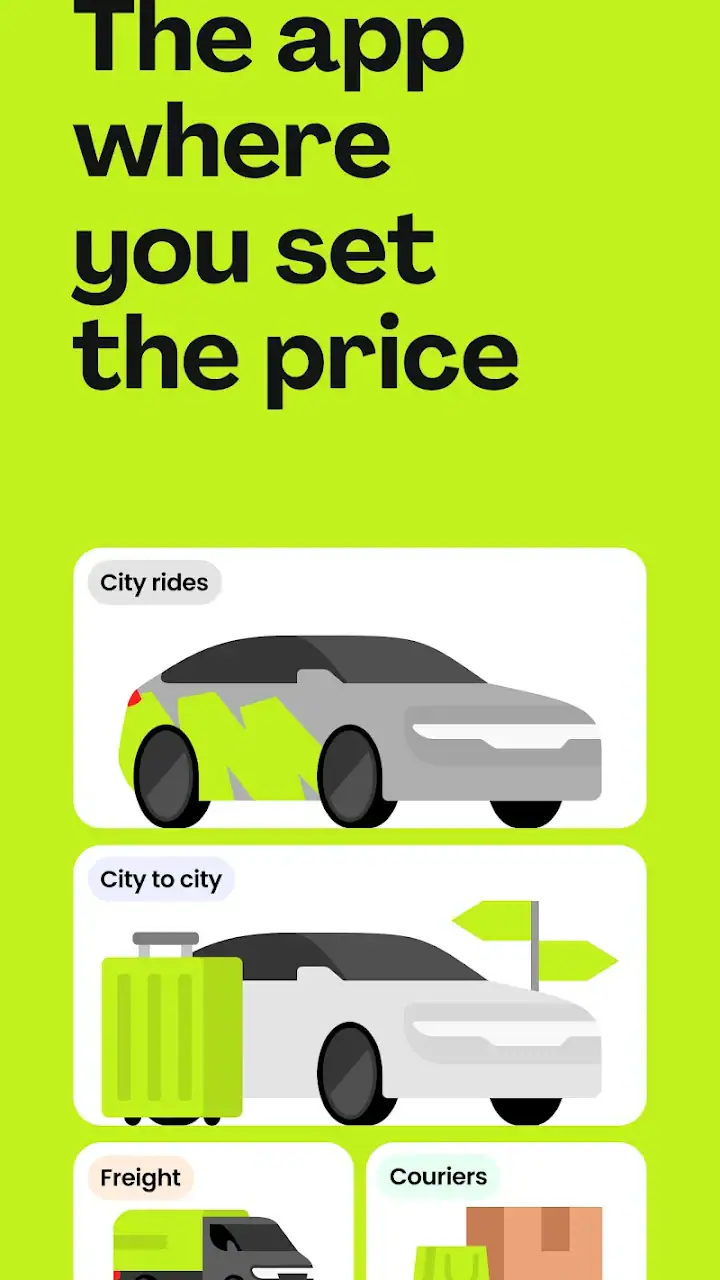
I find the negotiation model most useful when I have a little planning time. For a routine trip, I can make a measured offer and compare responses. For an urgent departure, the convenience of a traditional automatic booking may outweigh the extra control inDrive provides. The choice is not only about money; it is about whether I want certainty or participation.
Using the app in real mobile situations
Most rides begin while I am moving, carrying something, or trying to read a street name quickly. That makes the pickup point more important than it may appear on a calm home screen. A pin placed on the wrong side of a divided road can create confusion even when the route itself is correct. I take a moment to check the map against a visible landmark, entrance, or road direction before sending the request.
This is particularly important at transport hubs. A station or airport can have several entrances that look close on a map but are difficult to reach on foot. If I choose a pickup point that a car cannot easily access, a good connection will not solve the problem. I prefer a clear, legal stopping place and, when possible, a location that both driver and passenger can identify without a long phone conversation.
One useful workflow is to prepare the destination before I actually need the ride. I can check the address, notice whether the map places it on a service road or main street, and think about a sensible pickup area. Then, when I am ready, I am not trying to type while crossing a busy sidewalk. This is a small improvement, but it makes inDrive feel much more dependable in everyday use.
The app also suits situations where plans are flexible. If I am visiting a new neighborhood, carrying shopping, or travelling with another person, I can consider the responses rather than automatically accepting the first option. On the other hand, anyone who dislikes comparing offers may find the interaction slower than a conventional ride-hailing flow. The app gives me control, but control requires attention.
A realistic trip from a crowded terminal
Imagine arriving at a busy terminal with a phone battery that is not full and a connection that keeps changing as people move around. I would not wait until I am outside the building to begin everything. I would first identify the correct exit, prepare the destination, and make sure the pickup point is somewhere a car can actually reach. Once outside, I would send the request, keep the app open long enough to see the current response, and avoid walking to another area until the driver and meeting point are clear.
If several drivers respond, I would compare more than the proposed fare. A slightly lower offer is not automatically better if the pickup is inconvenient or the response is unclear. I would look at the visible driver and vehicle information, consider how close the car appears to be, and choose the option that gives me the least complicated meeting. This is where inDrive differs from a purely price-focused tool: the cheapest response can create a worse trip if it increases uncertainty.
When travelling with luggage, I would also allow extra time for a driver to reach the pickup point. A live map is helpful, but it should not be treated as a promise that the vehicle will arrive instantly. Buildings, restricted roads, and terminal traffic can make a short distance take longer than it looks. The app works best when I use its information as guidance rather than as a guarantee.
What happens when a ride does not go smoothly
Connectivity problems are only one kind of failure. A driver may take longer to respond, a pickup may be misunderstood, or I may realize that my chosen location is inconvenient. The best way to recover is to stay methodical. I check whether the request is still active, whether a response has actually been accepted, and whether the destination and pickup details remain correct before taking another action.
When the connection drops during this process, I avoid repeatedly tapping buttons. Repeated requests can create uncertainty about whether the first action went through. I wait for the screen to update, restore a better signal if possible, and then verify the current state. Moving toward an open area or a doorway can help more than standing inside a dense building, but I would not assume that every pending action has failed simply because the screen is slow.
A useful recovery plan starts before the ride. I keep the phone charged, know the exact address I am travelling to, and make sure I can recognize the pickup place without depending entirely on a moving map. I also avoid starting a request while my phone is switching between networks or when I am about to enter a tunnel. These are ordinary precautions, yet they matter more in a service that needs continuous communication between passenger, driver, and app.
There is a human side to recovery as well. If the driver and I are close but cannot see each other, a clear landmark is more useful than vague directions such as “I am near the entrance.” I use the simplest description possible: a particular gate, corner, sign, or visible shop. That reduces the amount of back-and-forth messaging and is kinder to both people when the connection is intermittent.
When I would choose another option
I would skip inDrive for a trip where I need the most predictable, low-effort booking possible and have no time to evaluate responses. I would also be cautious when I am in an area with poor service, unfamiliar roads, or a pickup location that changes frequently. In those cases, a conventional taxi app with a fixed quote or a locally established taxi service may be easier to manage.
The app is also less appealing if I want every decision automated. Its central strength is the same thing that creates friction: I choose the fare, review responses, and select a driver. Someone who prefers not to negotiate may see this as unnecessary work. I see it as worthwhile when the trip is not urgent and I care about having a say in the arrangement.
That does not make inDrive unsuitable for spontaneous journeys. It can still be useful at short notice, especially when responses arrive quickly and the pickup is straightforward. I simply would not assume that the same approach works equally well in every city, at every hour, or under every network condition. The experience is shaped by the local supply of drivers and by how clearly I can communicate my request.
Using inDrive without wasting mobile data
Because the app relies on live maps, driver responses, and trip updates, I use it with a little awareness of my mobile connection. I do not repeatedly refresh the screen just because a response has not appeared immediately. That rarely improves the situation and can make an already uncertain moment feel more confusing. A stable position and a clear request are more useful than constant tapping.
Before leaving home or a hotel, I prepare the destination and inspect the pickup area while I have dependable service. I also avoid unnecessary detours inside the app when I already know the address. The goal is not to micromanage every byte; it is to reserve the live connection for the parts that genuinely need it, such as requesting the ride and confirming the meeting.
If I am travelling internationally, I would check my mobile plan before relying on the service. A free app does not mean that mobile data is free, and a ride that seems inexpensive can become less attractive if connectivity costs are high. Wi-Fi can help with preparation, but I would not depend on a public network for the entire pickup unless it is stable and secure enough for the situation.
Battery use matters alongside data. A navigation-based ride app is not the only thing using a phone during travel, and a low battery can turn a manageable connection problem into a serious one. I keep the screen brightness reasonable, carry a charger when possible, and avoid closing the app immediately after requesting a ride if I still need current information. These habits are not special features; they are practical ways to protect the live link the service requires.
Making the fare decision more intelligently
The ability to offer a fare should not be treated as a contest to name the lowest possible amount. I think about distance, traffic, time of day, luggage, and how difficult the pickup will be. An offer that is unrealistic may save nothing if it produces few responses and forces me to start again. A fair proposal is more useful than an aggressive one when I value time.
I also separate the fare decision from the connectivity decision. If my connection is weak, I do not keep changing the offer simply because the screen takes time to update. I first make sure the original request is visible and active. Only then do I decide whether waiting is sensible. This prevents a poor signal from pushing me into unnecessary duplicate actions.
For regular journeys, I can learn from my own experience without assuming that one amount will always work. A route that is easy in the afternoon may be different during heavy traffic or at a less convenient pickup point. inDrive gives me room to adjust, but it does not remove the need for local judgement. That is an important distinction for anyone expecting the app to calculate the perfect price automatically.
My connectivity verdict on inDrive
After using it as a ride and navigation tool, I see inDrive as a strong choice for people who want more influence over how a trip is arranged. Its live, response-based system can feel more personal than a fixed quote, and the ability to consider driver offers is genuinely useful when I have enough time to make a thoughtful choice. The free price and Everyone rating also make it easy to try without a financial commitment.
Its weakness is inseparable from its design. The app needs current communication to be useful, and a weak signal can affect requests, updates, and pickup coordination. It is not the app I would choose blindly for a rushed trip from a confusing location. I would prepare the destination, check the pickup point, keep my phone available, and treat every status update as something to verify rather than assume.
The current version is 5.158.0 and works on Android 7.0 or later, which makes it accessible to many existing phones. Still, compatibility alone does not determine whether it suits someone. The better question is whether you enjoy having a say in the fare and are willing to spend a little attention comparing responses. If yes, inDrive can be a practical alternative to automatic ride-booking apps.
My recommendation is straightforward: use it when flexibility, price control, and a clear pickup plan matter more than instant automation. Keep a backup plan for weak connectivity, busy terminals, and urgent departures. With that realistic approach, inDrive feels less like a promise of effortless travel and more like a useful tool that rewards preparation, careful choices, and good communication.
FAQs for inDrive. Rides with fair fares
What is inDrive and how does it work?
inDrive is a ride-hailing app that allows users to negotiate the fare directly with drivers. Unlike traditional apps with fixed rates, passengers propose a price, and nearby drivers can accept, decline, or counteroffer. This unique feature provides flexibility and often results in more affordable rides.
Is inDrive available in my city?
inDrive is rapidly expanding and is available in numerous cities worldwide. To check if it operates in your area, visit the app’s official website or download the app and input your location. The app will notify you if services are available near you.
How does inDrive ensure passenger safety?
inDrive prioritizes safety by implementing several measures. All drivers undergo thorough background checks, and the app includes a real-time GPS tracking system. Passengers can share trip details with trusted contacts, and both parties can rate each other, helping to maintain a reliable community.
Can I schedule rides in advance with inDrive?
Currently, inDrive does not support scheduling rides in advance. The app focuses on real-time, on-demand services, allowing users to book rides instantly. This approach offers flexibility and ensures drivers are readily available when needed.
What payment methods does inDrive accept?
inDrive supports various payment methods, including cash and digital payments, depending on the region. Before taking a ride, check the app to see available payment options in your area. This flexibility allows users to choose their preferred payment method for convenience.
Pros
- Flexible fare negotiations with drivers.
- Wide availability in many cities.
- Simple and intuitive user interface.
- No surge pricing during peak times.
- Option to choose preferred drivers.
Cons
- Limited payment options available.
- No built-in GPS navigation for drivers.
- Driver availability can vary widely.
- Limited customer support channels.
- App can be buggy in some regions.


